Sunday, October 14, 2012

Influence


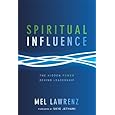
I've been thinking a lot about influence lately.  This has been stimulated in part by Mel Lawrenz's (@MelLawrenz) recent book.  As Mel was writing the book, he wrestled with whether to use the word influence or leadership.
  • They both involve the role of a person (leader/influencer) on others
  • They both highlight distinctive characteristics and point to an ideal (or anti-ideal)
As I have talked with many people recently, I have been struck by how many people think they are not leaders and have only trivial influence.  Really?  I suspect that most people have much more influence than they know.  The real difference may be between those with intentional influence, and those with casual influence.

Perhaps one could illustrate it this way:


To illustrate how much influence you have, try this experiment.  Open up your cell phone or your facebook, linkedin or Google+ account and look through this list.  All of these entries represent people you cared enough to enter into your list.  Grab a piece of paper and draw a line down the middle.  Now as you walk through your friend list, write names on the left side of the page of people who influence you, and names on the right side of people you influence. 

Look for patterns in your lists.  Here are some things to look for:
  • Are there more names on the left or on the right?  Why?
  • Are the influencers typically older than you are?
  • Is there a pattern related the principle setting of your relationships:  Work, school, home, church, community?
  • Is there a pattern of the content of your relationship: professional, hunting, sports, politics, online gaming?
  • Where you are the influencer, are you a good influence or a bad one?
  • When you receive influence from others, are you improved by the relationship?
  • Which relationships take more of your time… influencing or being influenced? 

Maybe you can derive some insight from what is not on the list.  Are you missing mentors?  Are you missing a key topic you care about?

My point here is to be thoughtful about the power of our influence and to make choices about direction and content of our influence.  The difference between leaders and the rest of us may simply be intentionality.  Or is it?

I can imagine some saying, “I am very intentional about shaping my kids, but they don’t react to anything I say.”  (Or replace kids with any other group you hope to shape.)  I’m leading, I’m intentional about my influence, but my teammates are still the same schmucks they’ve always been. You’ve heard it said that you’re a leader only if you have followers.  

Is leadership simply a matter of intentional influence?  It appears that there is a measure of effectiveness or power that matters, in addition to the object and intention of our influence.  But it seems to me that intentional influence is an essential component of leadership.

My thinking on this has just begun.  Here are a few questions to stimulate a conversation.  The assumption is that people will want to be intentional about influence:
  • How do I improve the impact of my influence when it is important to do so?
  • How do I lead differently if there is an influence in my target’s life that is much greater than my own?  Their neighbor?  Family of origin? Disability? Boss?


By the way, if you’re interested in more tools for mapping your social network, here are a few:
Map your linkedin connections
Facebook Friends on a Map
Facebook app: Super Friends. 


Wednesday, October 3, 2012

Success

I was asked today to share some thoughts on what it takes to be successful at GE.  (I don't think this is specific to GE, by the way.)  Here were the three core ideas:


  • Be curious
    Curious people are happier, learn more, and have a broader network than their non-curious peers.

  • See constraints as liberating
    Whining or suffering silently under constraints is a dead end.  People who try to design a system at 1/10th of the typical cost develop breakthroughs.  People who re-create when faced with a budget cut are more successful than those who just reduce their activities in line with the cut amount.

  • Have the confidence to be taught
    If you're learning, you'll be more effective and more influential.  But learning requires the humility to admit an area of ignorance or weakness.  Humility and influence are intimately linked.

Of course, it doesn't hurt to do what your boss asks you to do along the way!

;-)


Wednesday, September 12, 2012

Like

Interesting fact:  As of this writing there are 900M Facebook users.  There are 2.7B likes daily.  Let's say that every Facebook user is logged daily.  That's 3 likes per person per day.  The Facebook planet is a planet of affirmation experts.  Incidentally, by contrast, the typical denizen of the Twittersphere only tweets once every three days.

I am a frequent user of both and so my critique here is not a critique of the companies nor their offerings, but they make a great foil for asking the question about the value of affirmation.  Raj Verma (Chief Marketing Officer of Tibco Software) recently said, "Word of mouse is now greater than word of mouth."  Our online-ness is an artifact of our time, but there are many other places where we have replaced truth with affirmation.  Consider these:

  • Bumper sticker:  All children are gifted, but some open their gifts later than others
  • Grandma's aphorism:  When you grow up, you can be anyone you want to be
  • Pop psychology:  If we give kids good self-esteem, they'll overcome their challenges
  • USA:  The land of (equal) opportunity
You can probably add your own to the list.

But is any of it true?
  • I cannot be an astronaut nor an NBA player... does it help for you to tell me that was possible if only I had prepared myself?
  • I can probably learn to feel good about my sin, but that does not make it less sinful.
  • And actually, though I have a good education and I'm smart and I work hard, I have not had the same opportunity as Mark Zuckerberg nor the guy who delivers my mail.

And if it is not true, is it helpful?

Consider this:  with 2.7B likes a day, there's have a chance you have been liked... at least once.  But when you post a picture on Facebook and 5 people like it, are they saying you're a good photographer?  Are they saying the like the people in the picture?  Do they just like you?  I worry that we're raising up a generation of people who think they're wedding photographers because every picture they've posted has been liked by someone.  Just as currency is devalued when there is too much in circulation, I think we've devalued like without anyone realizing that is now worth less than before.

I don't want to be the grumpy old guy.  But can we move beyond like to words that are more helpful?  Can we move from empty encouragement to caring critique and carefully selected applause?

Friday, August 31, 2012

Trust

The loss of productivity at Potter's House is a frustration every time I visit. I love Potter's House and serving as one of its volunteers and advisers is one of the rare privileges of my life.  But consider the contrast between my sense of normal and theirs:


  • I leave my computer on my desk when I leave for lunch and the door open.  They have to lock both up.
  • I wander around and find an open meeting room.  There I have to find someone with the key.
  • Here we order Tshirts for the team and hand them out.  There, each team member has to sign a special sheet to indicate that they received the shirt.
It's not that the Potter's House leadership is a bad team or that they've cultivated a bad culture.  In fact, they're quite good at what they do.  But they live in a country in which basic trust is absent.

Many Americans are proud of their country, its freedoms, our heritage, and our creativity and inventiveness.  In reference to doing big, hard things, Mitt Romney spoke these words at the Republican National Convention:  "...that unique blend of optimism, humility, and the utter confidence that, when the world needs someone to do [something really hard], you need an American."


But I wonder if it is optimism, humility, and confidence that matter.  I'd like to suggest that it is actually trust that is the primary contributor to American productivity.  I trust that you won't steal my computer when I'm at lunch.  I trust that you will drive on the right side of the road.  I trust that our agreements will not have to be adjudicated in the courts, but that the courts will work when we have to go there.  If we had to adjudicate every agreement in the courts, we would be paralyzed for lack of a basic trust in the spirit and honor of a contract. 

My friend in leadership in other countries lose incredible productivity in protecting their assets and their staff.    The energy they put into protection, could be used for innovation.  They wait for the right person with the keys to open the conference room.  They sign, counter-sign, and seal even the most trivial documents.  They require time cards even for salaried employees. Two people are required even if it is the job for one, just to be sure that no graft is involved. If trust were at the core of the culture, the productivity boost would be incalculable.

Perhaps, if I were forming America's foreign policy, I'd be looking for ways to export more trust than food, fuel, technology, and pop culture.  It is much harder to do, and harder to account for, but maybe instead of being the world's policeman, we should be the world's trust broker.  I'm just not sure there are any willing importers out there.

Wishing it were better is not enough.  But getting our goals right might be a good next step.


Thursday, August 9, 2012

Justice


Applied justice is not blind reciprocity nor legalistic consistency. it is correction that turns us toward wholeness, rightness and newness.


I've been faced with lots of people demanding justice lately.  I suppose this is among the challenges of leadership.  The challenge has been to sort out what they want from what is required.  My good friend said, "Justice is what we want delivered to others and mercy is what we want delivered to ourselves."  Now there is insight!

  1. It seems that when people want justice what they really mean is retribution.  Put another way, they're asking for logically sanctioned reciprocal pain: "If Bob injured Steve, we must injure Bob."
  2. Other times it seems that when people want justice what they want is consistent discipline.  "When Mary cheated, you kicked her out.  Since Sally cheated, kick her out too."
  3. I've also seen a remarkable that there is a punitive assumption and voyeuristic infatuation, often in the name of transparency.  "In order to stop the rumors, you need to tell everyone what you did about the David situation."  
Really?

When did we lose sight of the purposes of our correction?  It seems to me that the core problem with the three issues raised above is that we have lost our focus on a better future.  To examine the three ideas above, consider this:

  1. If we were really interested in restoring both the injured and the injurer to a better place, what would we do?  My mother used to say, "Two wrongs don't make a right."  (But two Wrights make an airplane!)  Perhaps Bob must make amends as much as possible with Steve, but should we in fact injure Bob in the same way that he injured Steve?  I don't understand how that puts either of them in a better place.
  2. Reciprocity has its problems too.  If the way we disciplined Mary was unhelpful, should we repeat it with Sally in the name of consistency?  Or should we be learning leaders who get better at discipline and correction as we grow.  Some argue for, "let the punishment fit the crime;" I wonder if it would be better to frame it as, "Let the punishment fit the perpetrator."  What correction makes them better people?
  3. Even transparency, though logical, is often unhelpful.  The North Korean prison camp guards are reported to make liberal use of public executions in order to deter acts of dissent.  But is that really our model?  My practice has been public praise, private critique, positive tone.  My experience is that corrective action, accountability for remedy, and steady progress toward reconciliation happen best when they occur in small groups.  Think of it this way, is it harder to break a promise to a crowd (think politics) or to an individual (your running partner)?
In my nearly 30 years of employment, I have never fired an employee.  Not one.  Of those close to the edge, about 80% of them got better with good coaching.  The other 20% or so, eventually left as they found better suited roles.  Perhaps we need to change our focus from a simplistic view of justice as an equation to balance, and set our sights on justices as an unmistakable commitment to restoration for the injured and better character for the injurer.

Now some readers may wonder if I've lost my marbles.  Did you know that the Spanish word for marbles is "cincos". And even if you have four (cuatro) marbles, they're still cincos (fives)?  Crazy language.  

OK, that aside my seal it for you.  But in all seriousness, the question of criminal justice has to be looming in the background of this discussion.  Are you arguing, Paul, that terrorists, axe murders, and tax evaders really should be "coached" into better classroom behavior?  I've reached the conclusion that that would be a better outcome, but is very unlikely in the general case and very unlikely given the resources and structure of our criminal justice system. At the same time, there is little evidence that locking up a street corner drug dealer makes either the dealer better or restores the honor back to the community.  I'm not so sure our public justice system works toward better-ness, but it does work toward a consistent application of a public consensus of fairness.

I also grant that there are some crimes that are so heinous that punishment is the only course of action.  But this must be viewed from the perspective that in such situations, there is no real remedy for the injured and little hope of meaningful rehabilitation of the injurer.  Punishment is our choice when there is no way for either party to be improved through another option.

Consistent fairness may be the best we can get from our public institutions, and last resort punishment may be the best we have in extreme cases.  But in the everyday culture of most of our lives we have other options. I'm thinking about how we work toward better private institutions, and better offices, neighborhoods, churches, ballet schools, and Kiwanas Clubs.  Is fairness the best we have to offer?  Or can we, as leaders in these places, step beyond the simplicity of kindergarten reciprocity into a richer place of improvement for all parties involved?

Monday, July 23, 2012

On Grace


Grace in a sense is not God's blindness, nor God's desire to pretend that our sin is absent; rather it is that he refuses to let our sin become the defining element of our character.  Would he like us to be less sinful?  For sure, but he is focused more on our being defined by his Son than on the absence of sin.  

Satan, by contrast, wants us to be defined by our sin regardless of our righteousness.  In fact, he really doesn't worry about our occasional acts of holiness so long as we are focused on and are increasingly defined by our sin.  

There is great freedom that comes from understanding that it is the definition of our character, the core of our identity that is of primary importance; our disciplines of holiness are only tools to that end.

Monday, April 2, 2012

Ignorance, Apathy, Intimacy and Awe

In my high school years, a joke went like this:
Q: What's the difference between ignorance and apathy?
A: I don't know and I don't care.
I suppose that there may be many whose eschatology (good SAT word, so go look it up!) can be summarized by ignorance or apathy.   But for the present I worry more about the tension between intimacy and awe.

In the evangelical aquarium in which I swim, there is such an emphasis on God's grace that our kids have grown up not getting what they deserved and getting what they didn't deserve and there is a sense of a kind of avuncular (another good SAT word!) God.  "Hey God..." has become a common opening to public prayer among my daughters' friends.  It is a welcome contrast with the disembodied "power" that I imagined God to be as a teen.  But really... "Hey God..." Are you serious?

Perhaps that's the point.  We're not serious.  In the midst of our theological intimacy, we have lost the majesty and awe of the Creator of the Universe.  I'm not suggesting a return to the fear and trembling that was the staple food of a shame-based catechism.  I'm not even suggesting some sort of balance between intimacy and awe... an awkward middle ground.  Rather, I'm suggesting that we need both at the same time.

What is a life of intimacy and awe?  It is access to the Creator and Redeemer of the Universe.  It is like having a back stage pass... It permits a certain uncommon access, but not a buddy-buddy familiarity with the main act.

I'd be happy if we could replace, "Hey God" with "Wow.  God!"