Tuesday, May 7, 2013

Open Leadership


My tweet this afternoon was this:

If you practice an open #leadership style, eventually you will have a severe case of advice fatigue.  Keep listening.  Advice is not a threat.

Leadership is a throw away word, I suppose. Some leaders are commanding, others collaborating; some are facilitators, others are directors.  None are neutral.  Even an inert leader sets a tone that permeates.  So choose, I say, what kind of leader you will be in each of the settings in which you lead.

My default style is openly direct.  Listen, decide, communicate, and remain open to hear more.  It is neither paralyzed by endless debate, nor so bluntly confident that it is not open to critique.  But the listening is exhausting.  I think that those who practice this form of leadership will eventually collapse of advice exhaustion.  

This happened to me this weekend.  I was surrounded by great people who were fully competent and deeply well-meaning.  Listening to each of their perspectives was profitable.  But by the end of the weekend I craved the freedom to have my own opinion and choose my own course.

To be honest, listening well can be exhausting.  But I need to be careful to avoid the instinct that contrary advice is threatening or poorly motivated.  On the occasion when I sense that a line of questioning or advice has unwelcome intent, I have to revert to my knowledge of the person sharing. These are good people who want us to be correct and have a sense that we may have missed something important.  I remember a couple that I used to know who were bickering all the time and constantly correcting each other.  At one point I realized that Lana didn’t want to prove that Bob was wrong, she wanted Bob to be right!  It is with that spirit that I think we need to be listening well.


To take this concept of open leadership a step forward, I really need to distinguish between openness and full disclosure of everything I'm thinking and considering.  Some suggest complete openness about all things because the integrity is at stake.   But this assumes that information equals understanding.  If you need to be instructed about the danger in that statement, you haven’t been on the planet long enough.  ;-)


The risk of dismissing contrarians: When faced with contrary advisers, it is easy to dismiss them because we can find fault with their argument, or because we’re just too plain tired to process the information… again.  But I have found that there is value in continuing to listen.  It would be easier to continue down the course we have charted without bringing up the debate for consideration again.  We can be tempted to reason that the alternate perspective has been considered and we are just burning neurons to continue to rehash it. But that is a temptation I think we should resist.  By allowing our own counsel to be pressure tested that we can grow in confidence that our course is properly set, and be open to redirection if we have it wrongly set.  The pressure of alternate views will strengthen our confidence, knowing that we have been tested.

The risk of staying open too long.  There is some risk that remaining open to this pressure will erode our confidence.  If we become men and women whose conclusions are subject to the emotional pressure of the last person we talked to, we build our house on the sand.  (You can complete the analogy for yourself.)  But this weakened state of reasoning only comes when we perceive the critique of our conclusions as a threat.  Leaders are chosen in part for wisdom. Wisdom implies “God Sense” (to paraphrase Jill Briscoe).  Aristotle put it this way:  Wisdom is the combination of moral will with moral skill.  Jesus said, “wisdom is proved right by [wisdom’s] children.”  Wisdom is judged by its results.  As you ponder these things for yourself, I encourage you to have that combination:  God-centering, moral will, moral skill, focus on acting rightly.  This can be the energy that refocuses us when we slip into the question of our own confidence.

Proverbs 15 puts all of this much more succinctly,  “Plans fail for lack of counsel, but with many advisers they succeed.”  I suppose you could just read Proverbs, and save yourselves a lot of time!


Sunday, February 10, 2013

The Empty Satisfaction of an Answer

An answer is seductive.  When we're faced with a problem an answer is less painful than the problem, so we think.  But I've been struck by the curiosity anemia that substitutes the first answer for a better answer.  I think we get seduced by the comfort of the false security we feel when at least there is an explanation.

Consider this:
  • When the question is political, our reflex is to align with our political party. I'm a fiscal conservative... but should I be a debt hawk because most republicans are?
  • In the absence of full information, I fill the gap with the worst possible scenario... whether I'm worried about a child who is late to come home, or a co-worker who got promoted ahead of me.
I have remembered many times the disappointment I had when I learned to multiply fractions.  My world model was that multiplication always led to a bigger number.  Then someone taught me to multiply fractions and my incomplete view of multiplication was shredded.  My initial truths were helpful, but limited.

We laugh, but we often live with our initial truths for decades.  Many of my fellow evangelicals often live the truths taught to them shortly after their conversion.  That information was very helpful for sorting out major life questions in the beginning.  But 20 years later, the depth of their insight is often no greater than on day 2 of their Christian walk.  Is there no room for growing maturity and the subtlety of insight that comes with living a few years and studying the scriptures?  By analogy, if we were still walking as we did as toddlers, we could not dance.  Why are we still intellectually or spiritually toddlers instead of dancers?  I think it is because we too quickly become satisfied with our first understanding.

I have a friend who says, "Of course my opinion is right. If it were wrong, I would change it." But how would he know?

For years, I have been with students who just want the answer; forgetting the principles to be taught by the homework itself.  I have been with bosses who just want to know the results, even if the measurement system is uncertain.  I have been with grieving friends who want simple answers, and pretend to be satisfied with platitudes. I read emails from high school friends who still see beer in a basement as the highest form of fun... and that was our estimate in 1979 too.

We demand an answer from politicians, employers, spouses, and school administrators.  How often have I personally quoted a source I can't remember from a context that was irrelevant to an audience who just wanted someone to agree? We place higher value on a fast plausible answer than on an effective mature response.  We have lost the curiosity that would truly satisfy.  We've accepted Band Aid answers that cover up cancer problems.

Of course, we cannot be analysts for every decision.  Sometimes we just choose and move on.  But that is usually for things of little consequence.  My complaint is when we just choose and move on for the big stuff.

Here is the cure, I think:

  • Cultivate curiosity.  We need to be people who want to know more fully. We need to encourage those who are willing to ask for the reasons behind the simple answers.  When people have explored the alternatives and returned unsatisfied with other options; when they know why the answer is correct, then the solution is gold plated.
  • Cultivate wisdom. Some things have to be decided quickly -- We don't want our metaphorical Emergency Room docs to ponder the nature of blood before sewing a stitch.  But we need to be prepared for better than Band Aid answers by discovery and experience before the high stakes stuff stares us in the face.  We need to hang out with wise people, and build wide networks that will teach us more than we know.
  • Cultivate courage.  I don't mean bravado; I mean the humility to test our convictions. I met a young man recently who was convinced that he should become a pastor.  I asked him if he was convinced enough that he would be willing to explore other options.  The inference was that if he should  be a pastor, then there was no risk to exploring other options to confirm his call.  He was less than enthusiastic.  But wouldn't his conviction be stronger if he had explored the possibility that he was initially wrong and then convinced himself that he was in fact right?  Courage in this sense is the cousin of humility, openness, and teach-ability.  It takes courage to consider that there may be a better answer than the one we have committed ourselves to follow.
I am convinced that curiosity, wisdom, and courage are the new currency of affluence.  I suppose that you could consider this a kind of three part posture. The consequence of living in a way that practices curiosity, builds wisdom, and lives with humble courage is that empty satisfaction of the first answers will eventually be replaced by fuller and more complete understanding.

As parents, as leaders, as influencers, we can set the tone and the pace that encourages these traits. Perhaps we need to be more thoughtful about the experiences and training and protection we offer your children and our protégés.  Are we cultivating a hunger that is not satisfied by the fast food of the first answer?  Or are we sending our kids after the french fries of simple and incomplete conclusions?

Sunday, December 23, 2012

On Gun Violence

Following the gun massacres in the USA (now at a once per fortnight pace according to CNN), the national dialog on gun control reaches a new level of support.  Over 52 percent of Americans now support some kind of ban.

(For the record, though it is not the point of this post, my view is that there should be a ban on private ownership of military style assault weapons.  It won't stop the truly "professional" criminal, but it will stop the casual idiot if there is at least a reasonable barrier to acquiring guns.  I lock the doors of my home at night not because I think a professional thief could not get in, but because it deters the casual crook.)

Mel Lawrenz, writer and pastor in the Milwaukee area, has written a remarkably well-received Call for Wisdom in Washington.  I support Mel, and I support some kind of national governmental action. But the call to a fitting response cannot be governmental alone.  This is my main thesis:  We need a broad response that calls on the expertise and influence of many disciplines.

Movie Producers:  CNN carried a very interesting article this morning that shows that popular movies can include great content.  Beyond that, have you thought through your role in creating a culture in which violence is expected to make a movie -- and by extension life -- truly exciting.  Yes, you're led by the box office, but we need you to lead.  In the great debate of whether media shapes culture or the other way around, bias your thinking to the perspective that media shapes culture and think wisely about it.

Pastors: We love and appreciate your service, but we don't always love and appreciate your services. We need you to take your pulpit beyond the platitudes that will keep us numb for an hour on a weekend.  We need you to lead out of the gospel you know so well, but bring it to bear in a way that engages us broadly and points us more than theoretically to the Kingdom of God on earth.  This will require unusual creativity.  But we're created in the image of God, the great Creator.  Surely there's a vast store of creativity there!

NRA and Gun Advocates:  I understand and respect the ideas that hunting, target shooting, museum-like collecting and reasonable personal defense are legitimate gun uses.  But stories like the one on NPR that cover our governors considering permitting, encouraging, or requiring teachers to carry guns is a shift in our culture toward the wild west of the American West of the 1800s... or Somalia.  Is that where we want to live?  We need you to lead us to a place where the human-on-human use of guns is rare.  We need an answer that is better than just "more guns."  As experts in guns, we need you to use that expertise to create solutions that are more nuanced.

Video game producers:  I'm tempted to point you to the paragraph on Movie Producers.  OK, I will.  Musicians too!

Academics: Thanks for the statistical analysis.  I believe there is a role for this kind of analysis and if you're really good at it, then please step it up.  But as Nassim Taleb would argue, you're probably not really as good as we think you are.  As so many of the great movements of our culture have begun on university campuses, we need you to give birth to a new era of violence intolerance.

Lawyers and Ethicists:  Watch the Minority Report again. Then help us to frame how we will respond to those who say we should have better detection and better preemptive responses.  On the surface, I like the basic idea of stopping gun violence before it happens, but at what cost?  Are the risks of a presumption of guilt a price worth paying to reduce gun violence.  (I can hear the automatic cry "NO!", but at least we should do the thought experiment and check our values to be sure we mean that.)

Men: Let's face it, we are the perpetrators.  I don't want a culture of pansy men.  We are wired differently and we have a different temperament and mandate.  But hello, guys, this is not a time for us to just power-up, lock-up, and defend.  We need to take that instinct for defense and add to it the best wisdom and creativity we can muster to solve this problem with something more generous than "protecting me and mine." If ever there was a time for bravery beyond the bayonet, this is it.

And you could imagine another 2000 paragraphs with a charge to every vocation on the planet.  I don't expect many readers (I think blogspot statistics says these writings get about 20 hits a year), but I wonder what a national collective essay about the role we each play would teach us.  For sure, I know this is not a problem that Washington will solve on its own.

Friday, December 21, 2012

Marketplace Influence


These words were originally written to friends who were in the middle of a week-long international missions conference while I was traveling on business in Asia.

As you soak in the multi-layered experience of Harvest and International Center, I soak in the world of strange foods, complete language illiteracy, and geographic disorientation.  Add to that, my job has changed significantly, and there is a new team hungry to know their new boss.  I've alternated between gratitude, excitement, being humbled, and measured patience.  It is mixed with a little jet lag and a deep desire to be at home with you and family.  And so my mind turns toward what I can learn as I am stimulated in every sensory way.

My mind turns to David.  Psalm 78:72. And David shepherded them with integrity of heart; with skillful hands he led them.

What has struck me is that my new subordinates are as interested in who I am as they are in what I will do to them!  100s of questions in broken English about favorite foods, and interests, and what I think of China.  Joy in sharing their own interests.  Desire to find common ground.  I joined Weibo (the Chinese equivalent of Facebook+Twitter), and immediately had a new set of "friends."  They were anxious to make a connection even if there was shyness.  They raise glasses in toasts and walk from table to table in Chinese style to offer their good wishes.  They want to know their leader’s heart.

At the same time, they're interested in budgets, and timelines, and whether we'll continue in the way my predecessor led.  They want to know about priorities and decision-making approach.  They ache for change, but are wary of transition.  They want a skilled leader.

They are not Christians, nor Jews, nor anything really.  But they want a David.
I am fortunate that I have a boss who is not a Saul and is not threatened by any of this, but revels in it.

So as I plan this transition, I am both student and teacher; boss and colleague and subordinate; competent and illiterate; anxious and joyful. Their hopes are in conflict, some wanting one business decision and others wanting the contrary decision.  They want collegial decision-making, and clarity of direction.  They want a realist and a visionary.  They want authority and compassion.  And I want to be all of that.  ;-)

As my mind's eye paints this picture, I see a kind of canvas splashed with brush strokes tossed in vivid hues, sometimes mixing, sometimes clashing, but beautiful in its own way.  The call of the marketplace Christian, I am coming to believe is the call of men and women to step into this cacophony with a certain posture.  We can have a posture of critique that is borne out of our skill, or a posture of creative influence.  A football lineman has a stance ready for contact.  I fear that many Christians today have a stance or posture that is more ready to critique culture than to creatively influence it.  This critique-biased posture comes from skill without integrity.  Other Christians have a stance that is engaging but not changing; integrity without skill.  The call to influence is both skill and integrity, and it may be that this is why David is remembered with such honor through generations.

The challenge, of course, is how to cultivate both integrity and skill.  Awareness of that need may be the first step.  Cultivating both is the essence of Marketplace influence.

Sunday, October 14, 2012

Influence


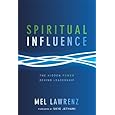
I've been thinking a lot about influence lately.  This has been stimulated in part by Mel Lawrenz's (@MelLawrenz) recent book.  As Mel was writing the book, he wrestled with whether to use the word influence or leadership.
  • They both involve the role of a person (leader/influencer) on others
  • They both highlight distinctive characteristics and point to an ideal (or anti-ideal)
As I have talked with many people recently, I have been struck by how many people think they are not leaders and have only trivial influence.  Really?  I suspect that most people have much more influence than they know.  The real difference may be between those with intentional influence, and those with casual influence.

Perhaps one could illustrate it this way:


To illustrate how much influence you have, try this experiment.  Open up your cell phone or your facebook, linkedin or Google+ account and look through this list.  All of these entries represent people you cared enough to enter into your list.  Grab a piece of paper and draw a line down the middle.  Now as you walk through your friend list, write names on the left side of the page of people who influence you, and names on the right side of people you influence. 

Look for patterns in your lists.  Here are some things to look for:
  • Are there more names on the left or on the right?  Why?
  • Are the influencers typically older than you are?
  • Is there a pattern related the principle setting of your relationships:  Work, school, home, church, community?
  • Is there a pattern of the content of your relationship: professional, hunting, sports, politics, online gaming?
  • Where you are the influencer, are you a good influence or a bad one?
  • When you receive influence from others, are you improved by the relationship?
  • Which relationships take more of your time… influencing or being influenced? 

Maybe you can derive some insight from what is not on the list.  Are you missing mentors?  Are you missing a key topic you care about?

My point here is to be thoughtful about the power of our influence and to make choices about direction and content of our influence.  The difference between leaders and the rest of us may simply be intentionality.  Or is it?

I can imagine some saying, “I am very intentional about shaping my kids, but they don’t react to anything I say.”  (Or replace kids with any other group you hope to shape.)  I’m leading, I’m intentional about my influence, but my teammates are still the same schmucks they’ve always been. You’ve heard it said that you’re a leader only if you have followers.  

Is leadership simply a matter of intentional influence?  It appears that there is a measure of effectiveness or power that matters, in addition to the object and intention of our influence.  But it seems to me that intentional influence is an essential component of leadership.

My thinking on this has just begun.  Here are a few questions to stimulate a conversation.  The assumption is that people will want to be intentional about influence:
  • How do I improve the impact of my influence when it is important to do so?
  • How do I lead differently if there is an influence in my target’s life that is much greater than my own?  Their neighbor?  Family of origin? Disability? Boss?


By the way, if you’re interested in more tools for mapping your social network, here are a few:
Map your linkedin connections
Facebook Friends on a Map
Facebook app: Super Friends. 


Wednesday, October 3, 2012

Success

I was asked today to share some thoughts on what it takes to be successful at GE.  (I don't think this is specific to GE, by the way.)  Here were the three core ideas:


  • Be curious
    Curious people are happier, learn more, and have a broader network than their non-curious peers.

  • See constraints as liberating
    Whining or suffering silently under constraints is a dead end.  People who try to design a system at 1/10th of the typical cost develop breakthroughs.  People who re-create when faced with a budget cut are more successful than those who just reduce their activities in line with the cut amount.

  • Have the confidence to be taught
    If you're learning, you'll be more effective and more influential.  But learning requires the humility to admit an area of ignorance or weakness.  Humility and influence are intimately linked.

Of course, it doesn't hurt to do what your boss asks you to do along the way!

;-)


Wednesday, September 12, 2012

Like

Interesting fact:  As of this writing there are 900M Facebook users.  There are 2.7B likes daily.  Let's say that every Facebook user is logged daily.  That's 3 likes per person per day.  The Facebook planet is a planet of affirmation experts.  Incidentally, by contrast, the typical denizen of the Twittersphere only tweets once every three days.

I am a frequent user of both and so my critique here is not a critique of the companies nor their offerings, but they make a great foil for asking the question about the value of affirmation.  Raj Verma (Chief Marketing Officer of Tibco Software) recently said, "Word of mouse is now greater than word of mouth."  Our online-ness is an artifact of our time, but there are many other places where we have replaced truth with affirmation.  Consider these:

  • Bumper sticker:  All children are gifted, but some open their gifts later than others
  • Grandma's aphorism:  When you grow up, you can be anyone you want to be
  • Pop psychology:  If we give kids good self-esteem, they'll overcome their challenges
  • USA:  The land of (equal) opportunity
You can probably add your own to the list.

But is any of it true?
  • I cannot be an astronaut nor an NBA player... does it help for you to tell me that was possible if only I had prepared myself?
  • I can probably learn to feel good about my sin, but that does not make it less sinful.
  • And actually, though I have a good education and I'm smart and I work hard, I have not had the same opportunity as Mark Zuckerberg nor the guy who delivers my mail.

And if it is not true, is it helpful?

Consider this:  with 2.7B likes a day, there's have a chance you have been liked... at least once.  But when you post a picture on Facebook and 5 people like it, are they saying you're a good photographer?  Are they saying the like the people in the picture?  Do they just like you?  I worry that we're raising up a generation of people who think they're wedding photographers because every picture they've posted has been liked by someone.  Just as currency is devalued when there is too much in circulation, I think we've devalued like without anyone realizing that is now worth less than before.

I don't want to be the grumpy old guy.  But can we move beyond like to words that are more helpful?  Can we move from empty encouragement to caring critique and carefully selected applause?